
Choosing the right cabinets is one of the most important decisions in any kitchen project. If you are trying to understand how to choose kitchen cabinets, you need to look beyond appearance alone.
Cabinets affect the kitchen’s style, storage performance, durability, maintenance level, and total project cost. They also require a surprising amount of detailed decision-making. From the cabinet box material to the door profile, edge finish, hardware, paint system, internal accessories, dimensions, packaging, and shipping, every detail can influence the final result.
For homeowners, developers, retailers, and importers, the process can quickly become time-consuming. Managing multiple design choices, supplier discussions, production updates, quality checks, and logistics is exactly the kind of coordination burden that many buyers underestimate. This is also why some international buyers prefer working with a single sourcing partner that can coordinate suppliers, monitor quality, and simplify communication throughout the process. One Stop China is positioned to reduce those sourcing and coordination challenges by acting as a single communication point and managing supplier sourcing, production monitoring, quality inspection, cargo consolidation, export documentation, and logistics coordination.
Why Choosing Kitchen Cabinets Is More Complex Than It Looks
Many people think kitchen cabinets are a simple product category. In reality, cabinets involve many connected decisions:
- cabinet style
- cabinet material
- door construction
- finish type
- hardware quality
- storage accessories
- moisture resistance
- customization level
- production lead time
- installation compatibility
A small change in one area often affects another. For example, a highly decorative cabinet style may need more hand-finishing, more precise machining, and longer production time. A painted finish may look elegant, but it usually requires more surface preparation and may need more maintenance than a laminated finish.
When cabinets are sourced internationally, the workload increases further. Buyers may need to review drawings, approve samples, check colors, confirm packaging standards, and coordinate inspections and shipping. Handling all these details across suppliers can be difficult, which is why a structured sourcing process is so valuable. One Stop China’s model of simplifying sourcing through one communication channel is designed for exactly this kind of complexity.
Start With Your Kitchen Priorities
Before comparing styles and materials, define your priorities clearly.
1. Budget
Set a realistic budget range for cabinets alone, not just for the whole kitchen. Some materials and styles look similar at first but differ significantly in price due to manufacturing complexity and finishing requirements.
2. Usage Level
Think about how heavily the kitchen will be used. A family kitchen, rental property, showroom kitchen, or luxury villa all require different durability standards.
3. Maintenance Expectations
Some cabinet finishes and ornate styles need more regular cleaning. If easy maintenance is important, simple door profiles and durable surfaces are usually a better choice.
4. Moisture and Heat Exposure
Kitchens face humidity, steam, oil, and temperature fluctuations. Cabinet materials must be suitable for the environment.
5. Lead Time
Highly customized cabinetry often takes longer because of shop drawings, sample approval, finish matching, production scheduling, and inspection.
Popular Kitchen Cabinet Styles and What They Involve
Modern kitchen cabinets focus on clean lines, minimal ornamentation, flat surfaces, and a streamlined look. They are popular in apartments, contemporary homes, and urban developments.
Common features:
- flat-panel or slab doors
- handleless or concealed hardware
- neutral colors such as white, grey, black, and wood tones
- smooth finishes
- integrated storage design
Pros:
Modern Kitchen Cabinets
- clean and timeless appearance
- easier to clean due to fewer grooves and decorative elements
- works well in small kitchens because it looks visually lighter
- compatible with many material options such as MDF, plywood, laminate, and acrylic
Cons:
- fingerprints can show more easily on glossy finishes
- poor-quality flat panels may warp over time
- modern designs require precise alignment, so production accuracy matters
- minimal design leaves little room to hide defects in finishing or installation
Workload and time requirement:
Modern cabinets may look simple, but achieving a high-end result often takes careful detail control. Buyers must review finish consistency, edge treatment, door gap alignment, and hardware integration. The cleaner the design, the more noticeable every imperfection becomes.
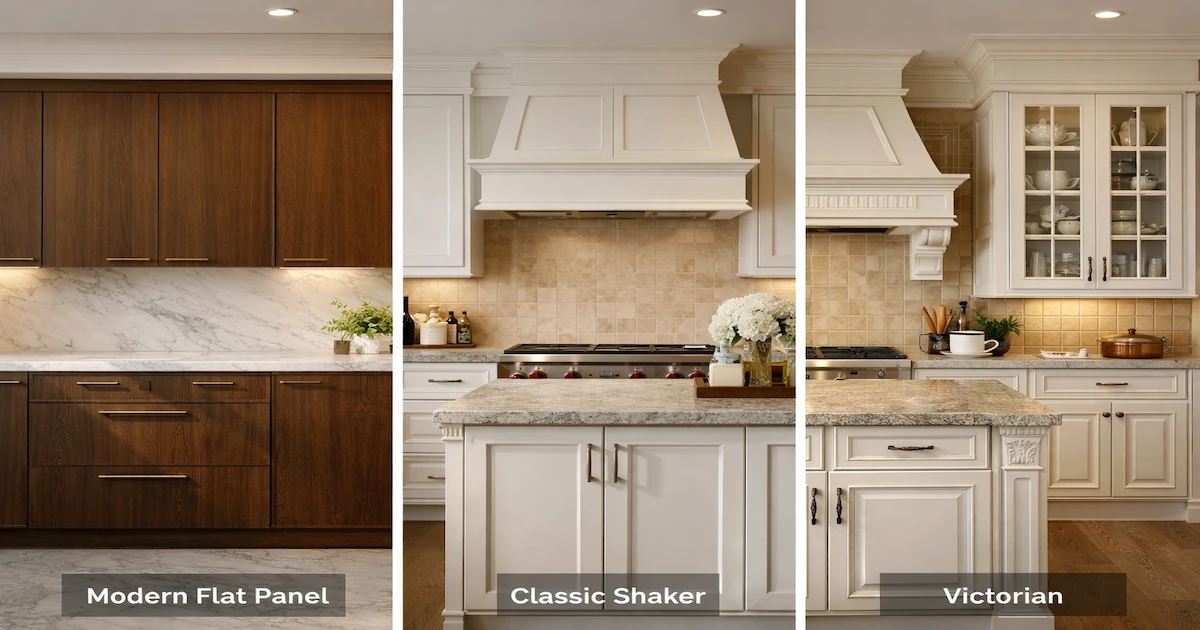
Classic Kitchen Cabinets
Classic cabinets usually combine balanced proportions, framed details, raised or recessed panels, and a warm, established appearance. They are suitable for homes that want a traditional but not overly decorative design.
Common features:
- shaker doors or framed panel doors
- warm painted or stained finishes
- visible handles and knobs
- symmetrical layout
- decorative cornices or trim in some cases
Pros:
- versatile and widely accepted style
- works across many home types
- easier to update with hardware changes
- good long-term design stability
Cons:
- more detailing than modern cabinets means more cleaning effort
- visible joints and trim require careful workmanship
- some classic profiles can look dated if proportions are not well chosen
- painted classic cabinets may show wear over time in high-use kitchens
Workload and time requirement:
Classic cabinets involve more profile choices, trim details, and finish decisions than modern slab cabinets. Even a simple shaker kitchen can become complex once you add crown molding, glass doors, pantry units, islands, fillers, and internal accessories.
Victorian Kitchen Cabinets
Victorian kitchen cabinets are highly decorative and intended to create a rich, elegant, and traditional interior. They are often used in luxury homes, heritage-style interiors, and themed projects.
Common features:
- ornate moldings
- carved details
- raised panel doors
- decorative columns or corbels
- antique-style hardware
- deep stained wood tones or creamy painted finishes
Pros:
- strong visual impact
- ideal for premium traditional interiors
- creates a luxurious and custom-made impression
- allows high levels of personalization
Cons:
- usually more expensive due to detailing and labor
- difficult to clean because of carvings and ornamental surfaces
- not suitable for every space, especially smaller kitchens
- can feel heavy or outdated if not designed carefully
Workload and time requirement:
Victorian cabinets require far more work than many buyers expect. Decorative profiles, carvings, finishing layers, matching trim pieces, and hardware coordination can all increase design effort and production time. Every additional ornamental element adds complexity to manufacturing, inspection, and packing. This is where experienced coordination becomes valuable, especially if multiple factories or suppliers are involved.
Transitional Kitchen Cabinets
Transitional cabinets combine modern simplicity with classic warmth. This is one of the most commercially practical styles because it appeals to a broad audience.
Common features:
- shaker or slim-profile doors
- soft neutral colors
- simple hardware
- limited decoration
- balanced use of classic and contemporary details
Pros:
- broad market appeal
- easier to match with different countertops and backsplashes
- less risky than highly trend-driven styles
- suitable for both residential and commercial projects
Cons:
- can look generic if details are not planned well
- requires careful design balance
- poor material selection can make it feel low-end
Workload and time requirement:
Transitional kitchens seem straightforward, but the success of the style depends on proportion, tone, finish matching, and hardware selection. It often takes multiple revisions to get the look right.
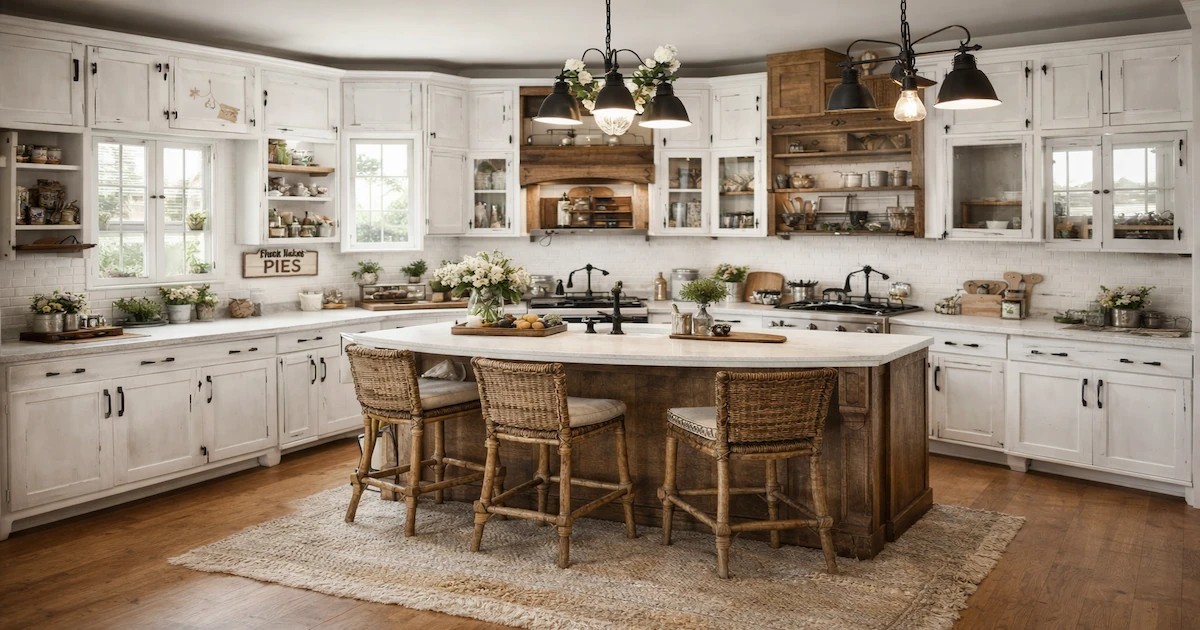
Rustic or Farmhouse Kitchen Cabinets
Rustic and farmhouse cabinets emphasize texture, warmth, visible grain, and a lived-in feel.
Common features:
- wood-look finishes
- distressed or textured surfaces
- framed doors
- open shelving in some layouts
- warm natural tones
Pros:
- welcoming and practical appearance
- hides minor wear better than glossy finishes
- works well with natural materials
- strong design character
Cons:
- distressed finishes can be difficult to standardize
- wood movement and grain variation may affect uniformity
- may not suit modern urban interiors
- decorative details can increase cleaning effort
Workload and time requirement:
Rustic cabinets often require sample confirmation because texture, stain tone, and distressing level can vary. Achieving a consistent “natural” look can take more effort than expected.
Kitchen Cabinet Materials: Pros and Cons
Material selection is just as important as style. It affects durability, appearance, maintenance, and price.
Solid Wood
Solid wood is widely used for cabinet doors and decorative components. Common species include oak, maple, ash, walnut, and rubberwood.
Pros:
- natural appearance and premium feel
- strong and durable
- can be refinished in some cases
- suitable for classic, Victorian, farmhouse, and luxury designs
Cons:
- more expensive than engineered materials
- can expand or contract with humidity
- grain and color variation require approval
- not always ideal for full cabinet boxes in humid environments
Best for: premium doors, visible parts, traditional and decorative designs
Workload and time requirement:
Solid wood requires more control over grain selection, finish matching, moisture content, and joinery quality. It can also increase sample approval time.
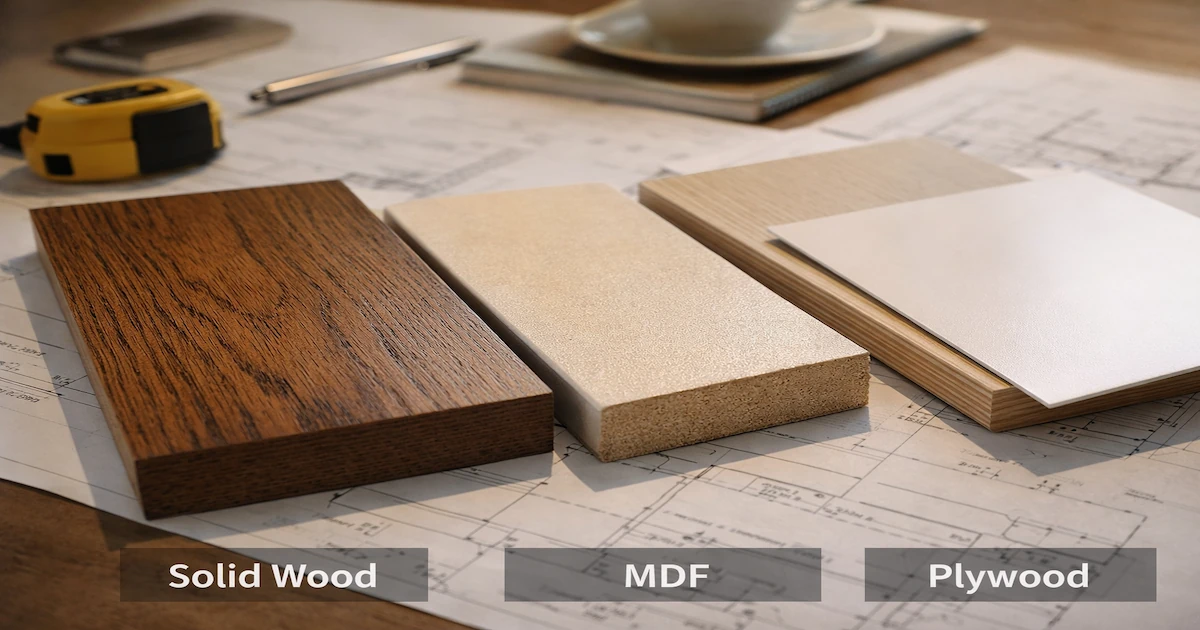
MDF (Medium-Density Fiberboard)
MDF is commonly used for painted cabinet doors because it provides a smooth surface and stable profile shaping.
Pros:
- smooth finish for paint
- cost-effective
- good for routed door profiles
- less grain-related surface variation than solid wood
Cons:
- weaker moisture resistance if edges are not sealed well
- heavier than some alternatives
- can swell if exposed to water for long periods
- lower perceived premium value than solid wood
Best for: painted shaker doors, classic painted cabinets, modern painted finishes
Workload and time requirement:
MDF looks simple on paper, but the paint process is detail-sensitive. Edge sealing, sanding, primer quality, and coating consistency all matter.
Plywood
Plywood is one of the most popular choices for cabinet boxes because of its strength and dimensional stability.
Pros:
- strong and lightweight relative to strength
- good moisture resistance compared with particle board
- reliable for cabinet carcasses
- suitable for many kitchen environments
Cons:
- usually more expensive than particle board
- edge finishing requires attention
- quality varies depending on core structure and veneer face
Best for: cabinet boxes, high-use kitchens, projects needing better durability
Workload and time requirement:
Plywood selection requires clear specifications. Buyers must confirm thickness, core quality, veneer grade, and edge treatment.
Particle Board
Particle board is widely used in budget-friendly cabinetry, often with laminate or melamine surfaces.
Pros:
- affordable
- smooth surface for laminated finishes
- commonly available
- suitable for lower-budget projects
Cons:
- weaker moisture resistance
- lower screw-holding strength compared with plywood
- can deteriorate faster in wet conditions
- generally lower durability perception
Best for: budget kitchens, low-to-medium use applications
Workload and time requirement:
Although affordable, particle board projects still need careful review of edge sealing, hardware installation strength, and water-exposed areas.
Stainless Steel
Stainless steel cabinets are used in some contemporary, commercial, or industrial-style kitchens.
Pros:
- highly resistant to moisture and heat
- hygienic and easy to sanitize
- modern and professional look
- suitable for heavy-duty use
Cons:
- expensive
- fingerprints and scratches can show easily
- colder visual appearance
- fewer residential design applications
Best for: commercial kitchens, industrial-style homes, high-moisture areas
Workload and time requirement:
Precision fabrication is critical. Surface finish, welding quality, and edge safety all need close inspection.
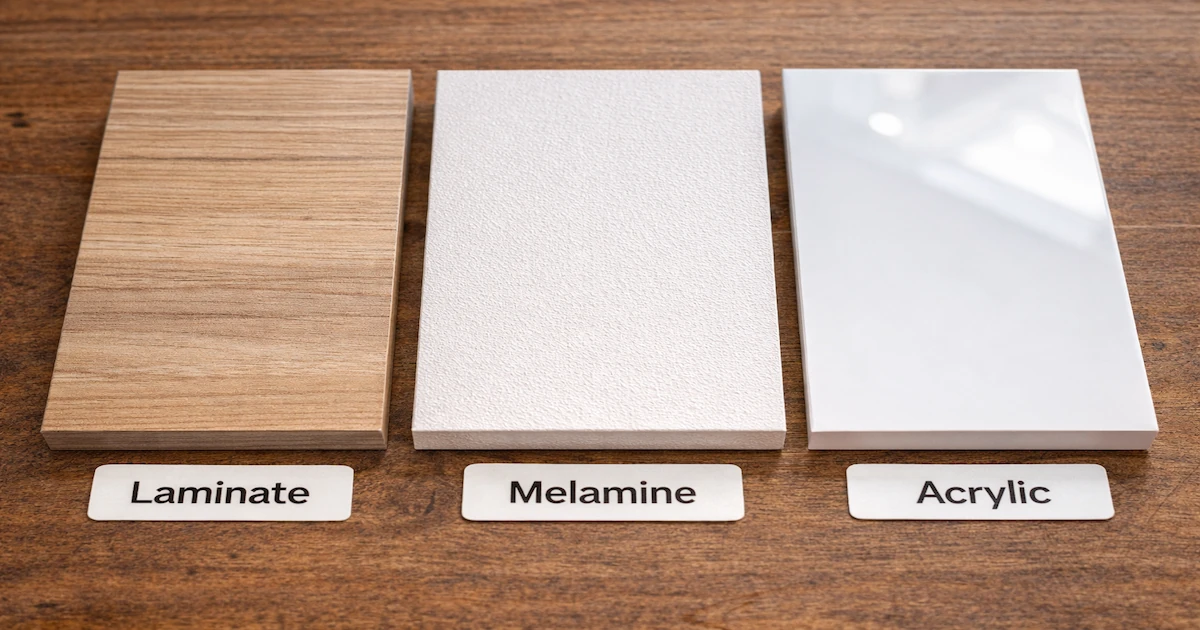
Laminate, Melamine, and Acrylic Finishes
These are finish systems rather than core materials, but they strongly affect cabinet performance and appearance.
Pros:
- wide design range
- easier maintenance
- often more affordable than natural wood finishes
- good for modern styles
- consistent color options
Cons:
- edge failure can become visible on poor-quality products
- some finishes are less heat-resistant
- glossy surfaces may show scratches or fingerprints
- repair can be difficult
Best for: modern cabinets, budget-to-mid-range projects, low-maintenance kitchens
Workload and time requirement:
Surface samples, edge banding quality, gloss level, and color matching all need approval before production.
Cabinet Design Details That Buyers Often Underestimate
This is where cabinet selection becomes truly time-consuming.
Door Profile Selection
A simple change from slab to shaker to raised panel changes the production method, cleaning difficulty, and overall appearance.
Finish Selection
Matte, satin, gloss, stained, painted, textured, and wood veneer finishes all require different preparation and maintenance levels.
Internal Accessories
Drawers, pull-out baskets, corner units, organizers, waste systems, and spice storage improve usability but add cost and coordination.
Hardware
Hinges, runners, handles, lift-up systems, and soft-close features affect long-term performance and customer satisfaction.
Measurements and Layout
Cabinet dimensions, appliance integration, filler pieces, toe kicks, and wall conditions all require precise planning.
Packaging and Shipping
For international projects, packaging quality is important. Poor packaging can damage corners, doors, and finished surfaces during transit.
This is why kitchen cabinets are not just a design purchase. They are a detail-heavy sourcing and coordination project. When buyers must manage several suppliers, separate inspections, multiple payments, and shipping arrangements, the workload increases quickly. One Stop China’s service model is specifically built to simplify supplier management, production monitoring, quality inspection, cargo consolidation, export documentation, and logistics coordination through one communication point.
How to Choose Kitchen Cabinets Step by Step
Step 1: Define the Style Direction
Choose whether your project is modern, classic, Victorian, transitional, or rustic.
Step 2: Match Material to Usage
Select solid wood, MDF, plywood, particle board, or steel based on durability, budget, and moisture exposure.
Step 3: Choose the Finish Carefully
Think about cleaning effort, scratch visibility, color consistency, and maintenance needs.
Step 4: Confirm Construction Quality
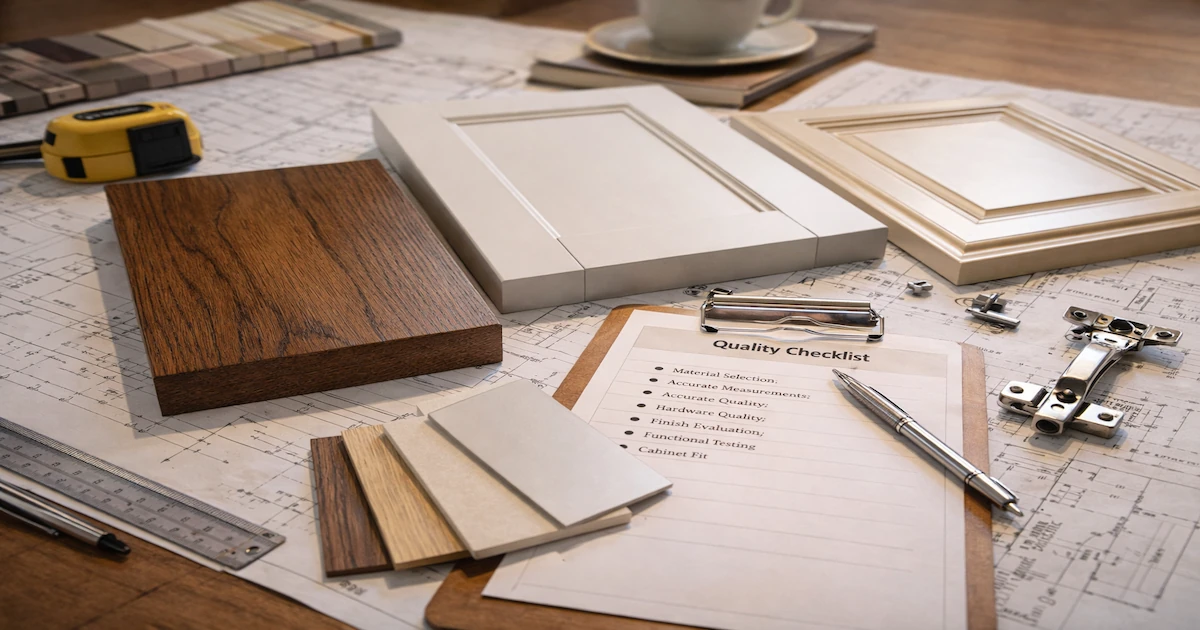
Check hinge quality, drawer runners, edge banding, joints, and coating consistency.
Step 5: Review Samples and Drawings
Never rely only on photos. Samples and technical confirmations reduce risk.
Step 6: Account for Lead Time
Decorative designs and custom dimensions usually need more time for approval and production.
Step 7: Plan Quality Control and Logistics
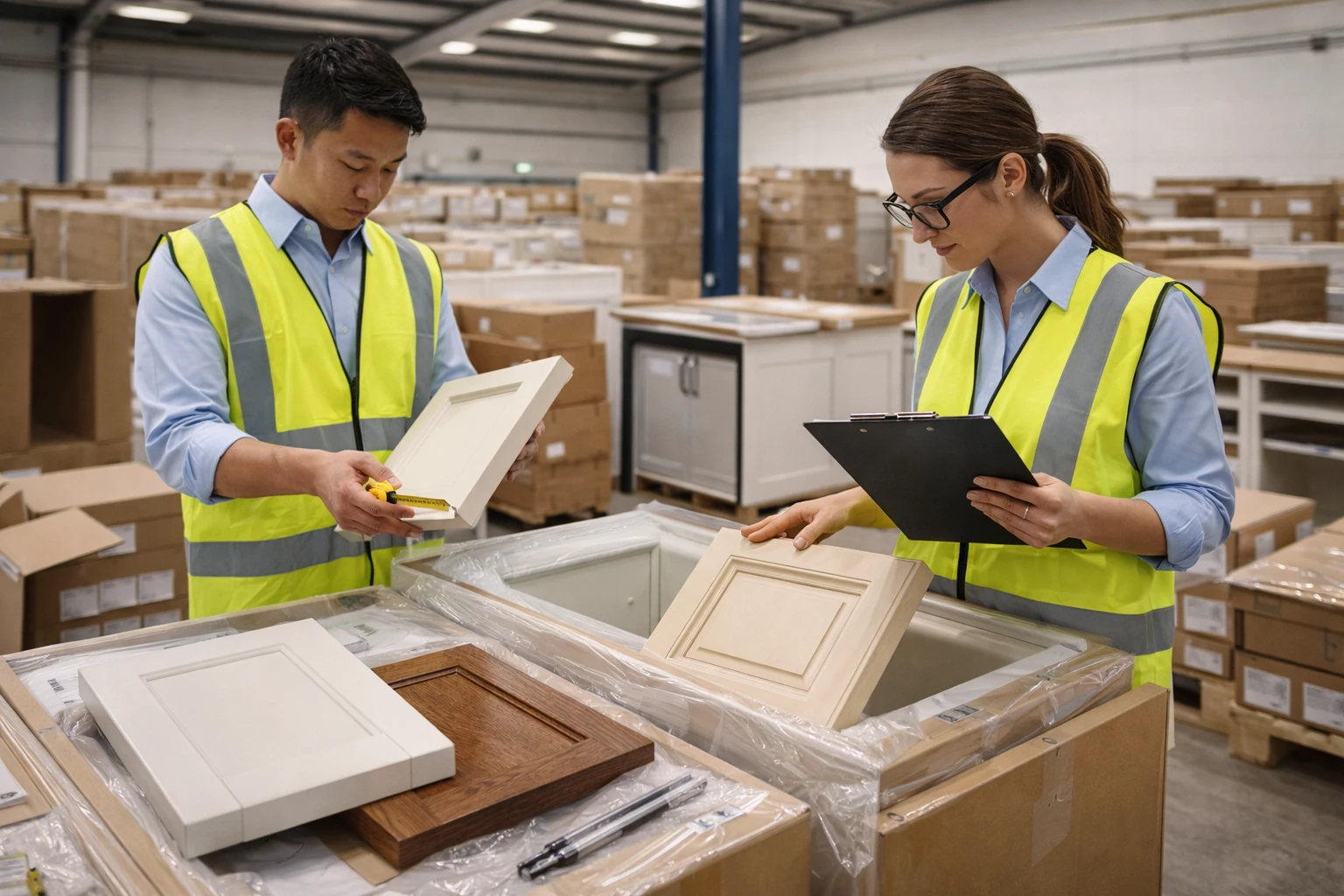
For larger or international projects, inspection and shipping coordination should be planned early.
Which Kitchen Cabinet Option Is Best?
There is no single best cabinet type for every project.
- Modern cabinets are best for clean, low-ornament spaces and easy daily cleaning.
- Classic cabinets offer balance and long-term flexibility.
- Victorian cabinets suit decorative luxury interiors but require more work, cost, and production time.
- Transitional cabinets are a practical middle ground for broad appeal.
- Rustic cabinets add warmth but need attention to texture and finish consistency.
In terms of materials:
- Solid wood offers premium appeal but costs more and needs better environmental control.
- MDF is strong for painted surfaces but requires proper sealing.
- Plywood is one of the most reliable cabinet box materials.
- Particle board is affordable but less durable in moisture-prone settings.
- Laminate and acrylic systems are practical and modern but must be produced well to avoid edge and surface issues.
Conclusion: How to Choose Kitchen Cabinets Without Costly Mistakes
If you want to understand how to choose kitchen cabinets, focus on more than style alone. The right decision depends on appearance, material performance, maintenance level, budget, production complexity, and the amount of coordination required.
Modern, classic, Victorian, rustic, and transitional cabinets all have advantages, but each also comes with trade-offs in cost, durability, cleaning, and lead time. Material choices such as solid wood, MDF, plywood, and particle board also affect long-term performance.
Most importantly, buyers should remember that cabinets are a detail-driven product. The more customized or decorative the design becomes, the more work is required in drawings, approvals, manufacturing, finishing, inspection, packaging, and shipping. For buyers sourcing internationally, reducing those headaches often depends on having one experienced partner coordinate the process from supplier selection to quality control and logistics. One Stop China helps simplify that process through a single communication point and coordinated sourcing support.
Call to Action for One Stop China
Planning a kitchen cabinet project involves much more than choosing a door style. Material decisions, production details, finish approvals, inspections, packaging, and shipping all require time and careful coordination.
One Stop China helps international buyers simplify the process by managing supplier sourcing, production monitoring, quality inspection, cargo consolidation, export documentation, and logistics coordination through one point of communication. That means fewer sourcing risks, smoother communication, and less time spent managing separate suppliers and service providers.
Contact One Stop China if you want professional support with kitchen cabinet sourcing, quality control, and coordinated supply from China.